The Mega Backdoor Roth Strategy: Advanced 401(k) Planning for High-Income Earners
Many high-earning professionals focus heavily on maximizing traditional pre-tax retirement contributions while overlooking one of the most valuable tax-advantaged retirement planning opportunities available today: the mega backdoor Roth strategy. Besides the opportunity for Roth-style accounts to grow tax-free and ultimately enjoy tax-free retirement income (so long as you adhere to the strict guidelines), the unique feature of the mega backdoor Roth is creating an opportunity to contribute an additional $40,000+ after-tax contribution without the income limits of direct Roth IRA contributions.
How it Works
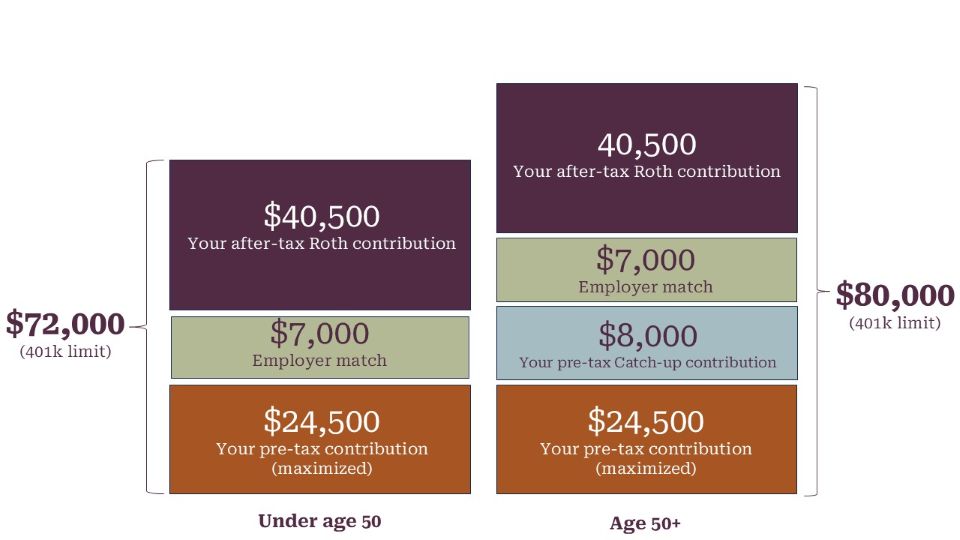
The above illustration is for a 45-year-old employee earning $350,000, maximizing pre-tax contributions (elective deferrals) of $24,500 (2026), and receiving an employer matching contribution of $7,000. With the defined contribution plan limit of $72,000 for being under age 50, the employee can contribute $40,500 of after-tax dollars, which these “mega” contributions are then converted into a Roth IRA or a Roth 401(k).
For those age 50+, they are eligible for an additional $8,000 pre-tax “catch-up” contribution, with a total plan limit of $80,000. And if you are aged 60 to 63, the Secure Act 2.0 (a.k.a. OBBBA) allows even higher catch-up contributions, bringing their total to $83,250.
Assuming you are a highly compensated employee, it is important to learn from your plan administrator whether there are contribution limits due to IRS non-discrimination testing requirements, as well as some employers not allowing mega backdoor Roth conversions.
Final Thoughts
For high-income earners seeking advanced retirement planning strategies, the mega backdoor Roth can be one of the most powerful ways to increase tax-free retirement assets and the potential of no required minimum distributions (RMDs).
When integrated thoughtfully into a broader wealth management strategy, this approach may help high-net-worth individuals improve long-term tax efficiency, create more sustainable retirement income, and improve estate and legacy planning flexibility.